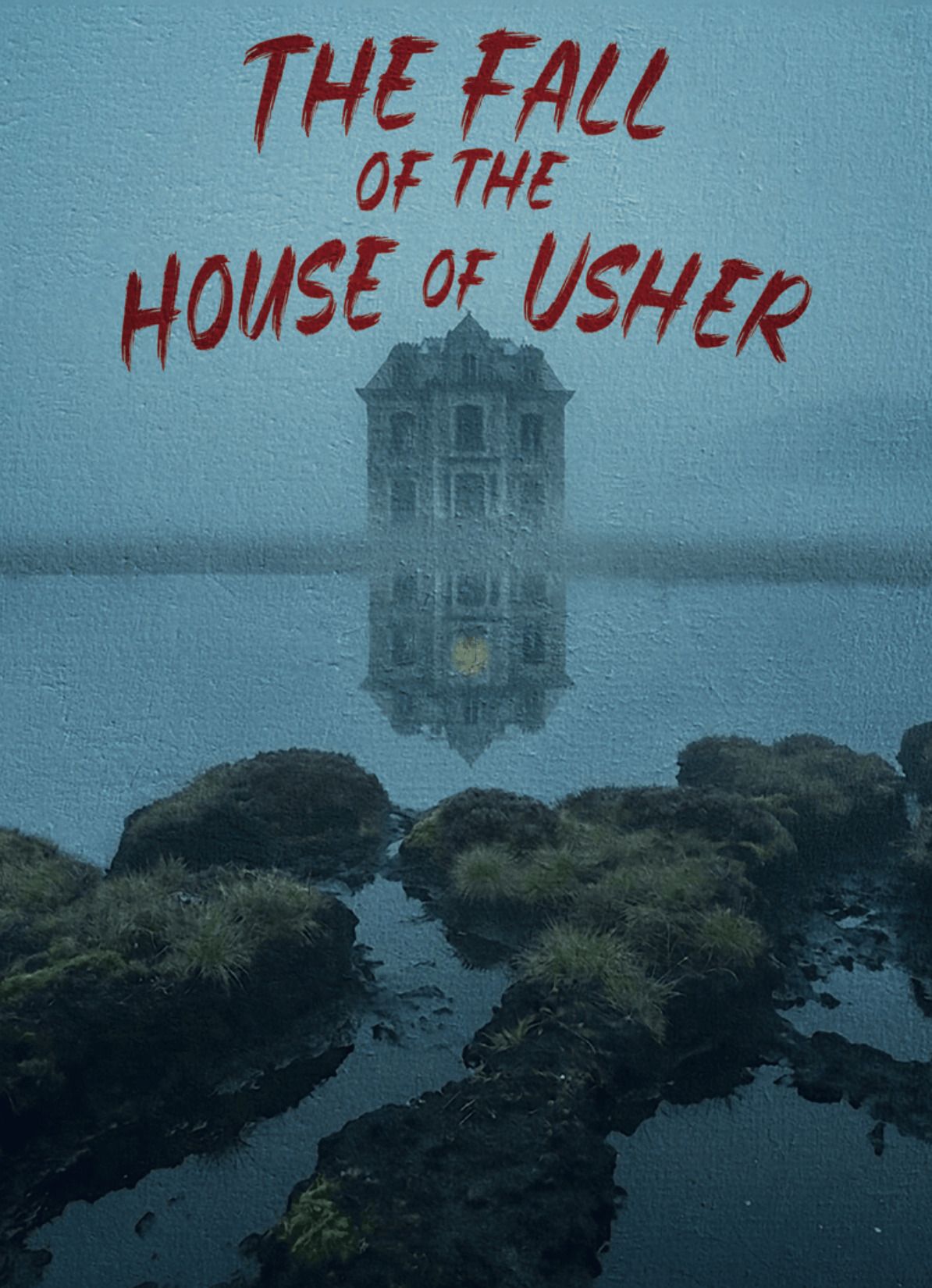
Philip Glass: The Fall of the House of Usher—a chamber opera in two acts based on the short story of the same name by Edgar Allan Poe
In 1839, Edgar Allan Poe’s (1809–1849) famous story “The Fall of the House of Usher” appeared for the first time in *Burton’s Gentleman’s Magazine* in New York. As the inventor of modern crime fiction, Poe, with his fantastical horror stories, is considered one of the pioneers of psychoanalysis. In American literature, he is regarded more as an outsider. In Europe, where his works were popularized by his admirer Charles Baudelaire, they soon found an enthusiastic readership, particularly in German-speaking countries. Poe’s writings often blur the boundaries between this world and the next, which is what makes them so fascinating.
William is summoned by his childhood friend Roderick Usher, who asks for his help. Is what William experiences during his stay at the Usher house a dream or reality? A journey into his own past. Roderick’s strange love for his terminally ill twin sister Madeline, whose voice can be heard day and night in the house, even after she has been buried in the house’s underground dungeon.
The American Philip Glass (b. 1937) is one of the most popular contemporary composers. His name is invariably associated with the artistic movement known as Minimal Music, a term first coined by the American Tom Johnson (e.g., *The Four-Note Opera*, most recently performed in 2025 by the Opera Factory Freiburg) and the British composer Michael Nyman (e.g., *The Piano*). Glass himself would classify only the music he composed between 1965 and 1975 as belonging to this genre and prefers to describe his works as “music with recurring structures.” His musical style is significantly influenced by Indian music and his mentor Alla Rakha. “It was through this music that I developed my sensitivity to rhythm.” Glass gained worldwide fame in 1976 with the opera *Einstein on the Beach*, which was followed by numerous collaborative projects with Robert Wilson. In the 1980s, he collaborated with Achim Freyer in Stuttgart on a Glass trilogy, including the world premiere of *Akhnaten* (Echnaton). Philip Glass has since composed more than 20 operas. He has become known to a wide audience through his film scores (Koyaanisqatsi, Dracula, The Hours, and many others).
Philip Glass’s music supports the harrowing plot with a floating, captivating soundscape that transports the listener into a kind of meditative trance. The apparent lack of action in the music, when considered in the context of the plot, underscores the nightmarish atmosphere of this horror ballad, based on the short story of the same name by Edgar Allan Poe. Glass has written the three main parts for tenor, baritone, and soprano. In addition to guitar, percussion, and synthesizer, he employs the conventional instrumentation of a chamber ensemble.
Philip Glass (*1937): The Fall of the House of Usher (1987/88)
Chamber opera in two acts based on the short story of the same name by Edgar Allan Poe
Libretto: Arthur Yorinks
Performances in the original English with surtitles
Freiburg premiere
Artistic Team
Musical Director: Klaus Simon
Director: Joachim Rathke
Set Design: David Mohoric
Dramaturgy: Cornelius Bauer
Theater Education: Friederike Neff
Soloists
William (baritone): Ekkehard Abele
Roderick Usher (tenor): Wei-Chieh Tai
Madeline Usher (soprano): Leonor Pereira Pinto
Servant (bass): Johannes Blank
Physician (tenor): Markus Brock
Assistants
Musical Assistant & Conductor for the 2nd Performance: Yves Scheuring
Piano Accompaniment: Ariane Moulin
Assistant Director: Ann-Marie Najderek
Set Design Assistant: Charlotte Vosteen
Holst Sinfonietta
Flute/Piccolo: Clara Giner Franco
Clarinet: Lorenzo Salvá Peralta
Bassoon: Robert Oros
Horn: Pau Riedweg Canturri
Percussion: Lee Forrest Ferguson
Guitar: Lorenz Zimmermann
Keyboard: Ariane Moulin
Violin: Sylvia Oelkrug
Violin: Saskia Mährlein
Viola: Katrina Saffuri
Cello: Philipp Schiemenz
Double Bass: Anna Stelzner