Wolfgang Amadeus Mozart, Requiem, K. 626 - Evgeni Orkin, Letters from the Shadows
The Requiem in D minor, K. 626, composed in 1791, is Wolfgang Amadeus Mozart’s final composition. The mysterious circumstances surrounding the commission and Mozart’s untimely death while he was working on the Requiem have always given rise to myths that make this magnificent work even more enigmatic. Mozart left the piece unfinished; as is well known, Süßmayr completed it based on sketches, most of which were found in Mozart’s estate after his death. One exception is the sketch for an “Amen” fugue, which was discovered in 1960 by the German musicologist Wolfgang Plath. This fugue was likely intended as the conclusion to the “Lacrimosa.” There are now several completions of this piece. If one wishes to perform this “Amen” fugue, it makes little sense to use Süßmayr’s completion of the Requiem. For this reason, we have opted for Richard Maunder’s completion.
The orchestra L’arpa festante commissioned the Ukrainian composer Evgeni Orkin, who lives in Germany, to write a piece that could be performed specifically as a musical bridge to the Mozart Requiem. The result was the composition *Letters from the Shadows*, which premiered in Heidelberg last October. It is a musical setting of letters by Leopold Mozart, Wolfgang Amadeus Mozart, and his youngest son, Franz Xaver Mozart. The term “shadow” can be interpreted in various ways: as the shadow of times past, from which the letters speak to us, as well as life lived in the shadow of a demanding or famous father. Furthermore, motifs from Mozart’s works appear sporadically in the piece in a shadow-like form. The composer writes: “Without thrusting itself into the foreground, the piece is intended as a gentle framework and introduction to the great Requiem.”
Karla Massouh, soprano
Luzia Ernst, alto
Florian Cramer, tenor
Friedmann Röhlig, bass
Orchestra: Baroque Orchestra L’arpa festante
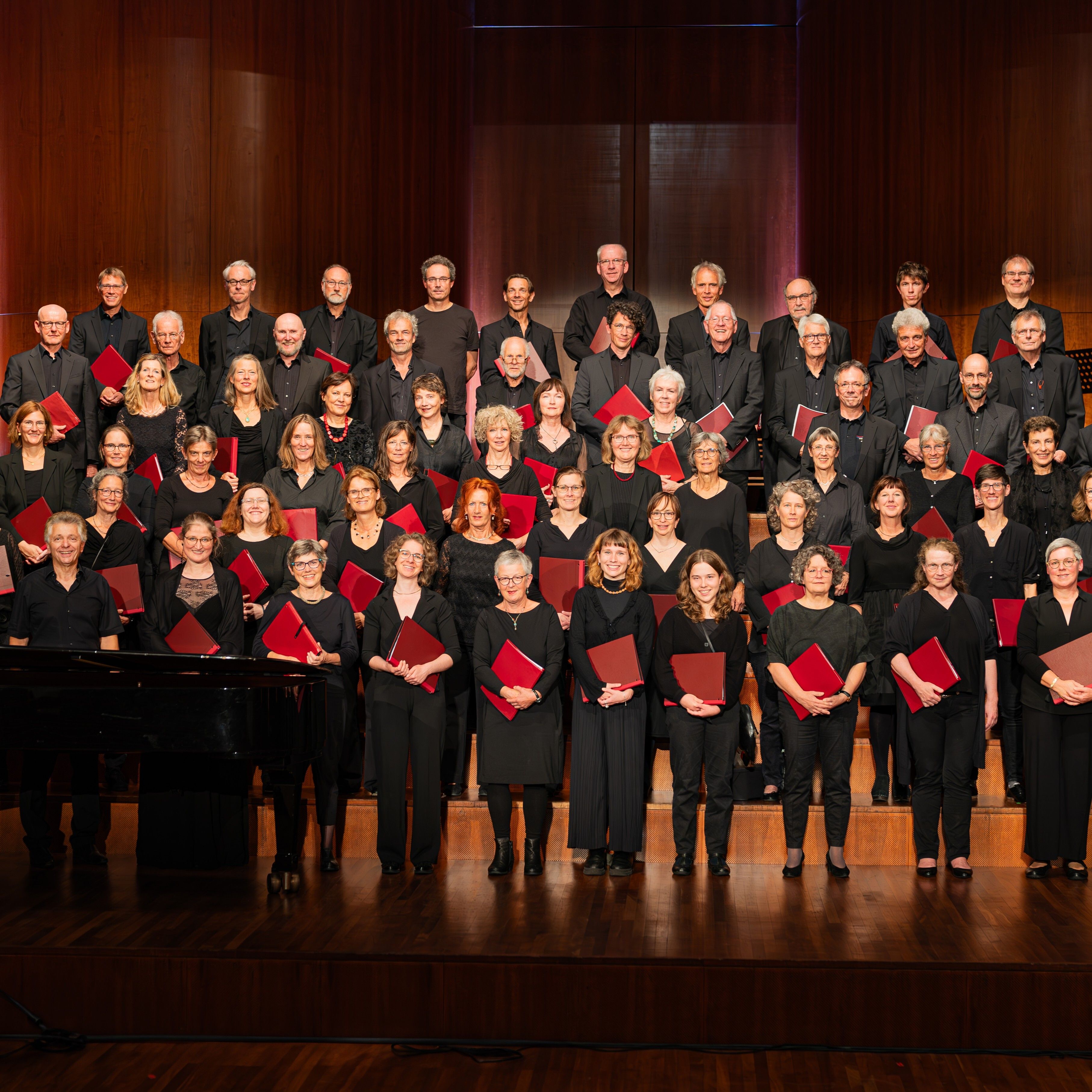
Choir: Freiburg Oratorio Choir
Conductor: Bernhard Gärtner
Copyright: Freiburg Oratorio Choir