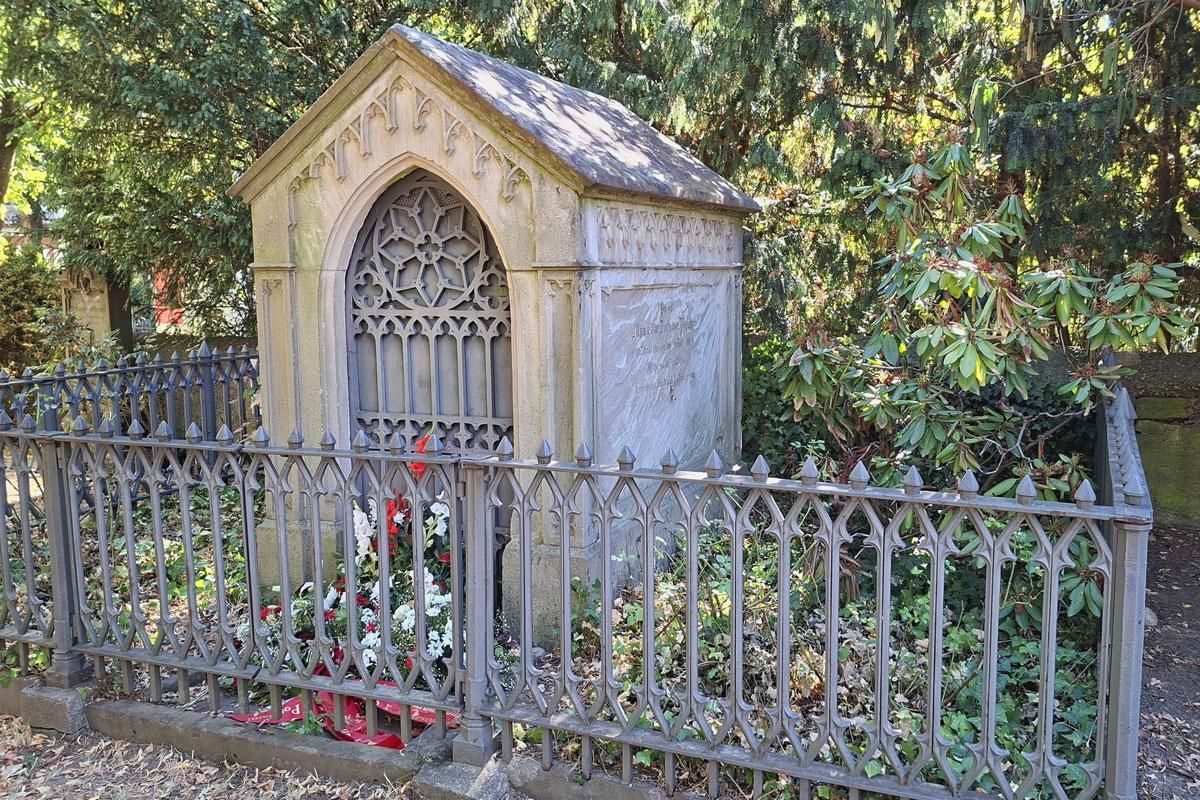
Orpheus
Probably because it is commonly believed that Rilke had a difficult, even critical, relationship with music, this chapter—in contrast to the visual arts (Rodin, Cézanne)—has received little attention. We hope to remedy this somewhat during our commemorative evening marking the 100th anniversary of his death. For even if his path to music was initially a problematic one, his work is nonetheless one of the most musical of all, and the concept of music runs like a common thread through his poetry. The focal point of the evening will be a selection from the Sonnets to Orpheus and the long poem. The Sonnets to Orpheus were written in 1922, at the same time as he was completing the Duino Elegies, and the long poem Orpheus.Eurydice.Hermes in 1904. While the sonnets are considered one of Rilke’s major works, the long poem—which Joseph Brodsky called “probably the greatest poem of the 20th century”—remained relatively unknown. We juxtapose these texts with compositions that do not explain his own difficult path to music—that is, Gregorian chant, Bach, and Beethoven—but rather works by composers of his time and circle who responded to his texts. In this way, we hope to expand and enrich the resonant space that these magnificent texts open up. And since we’re speaking of Orpheus, one voice must not be missing: Rachel Harnisch, who launched her meteoric career here, returns to Freiburg for this evening to sing songs by Alma Mahler, Alban Berg, and two songs from Hindemith’s *Marienleben*. She will be accompanied by Aziz Kortel, who will also perform pieces by Scriabin, Fauré, and Ravel.
Gerd Heinz, recitation
Rachel Harnisch, vocals
Aziz Kortel, piano