Future Forest - What Does the Changing Forest Sound Like? (Episode 4)
Our forest rustles and chirps, splashes and drips—and yet most of its sounds elude the human ear. Composer Kirsten Reese and geobotanist and ecoacoustician Dr. Sandra Müller from the University campus Freiburg have listened more closely: using hydrophones in waterways, ground sensors in the soil, and special microphones attached to tree trunks. Over months and years, recorders in research areas in the Black Forest, the Solling, and the Schorfheide captured one minute of sound every ten minutes—a long-term acoustic memory of the landscape that extends far beyond what humans can perceive.
But this memory is changing. Ecoacoustics makes audible what measurements alone cannot reveal: what an ecosystem sounds like when it comes under pressure—and when it tips over. The forest, caught between wild nature and managed forestry, is not a stable state but a process with thresholds that can only be recognized as such in retrospect. When is a forest still wilderness, and when is it merely a resource? The long-term archive of recordings makes precisely this audible: not the dramatic turning point, but the subtle shift—that moment when something has irrevocably changed.
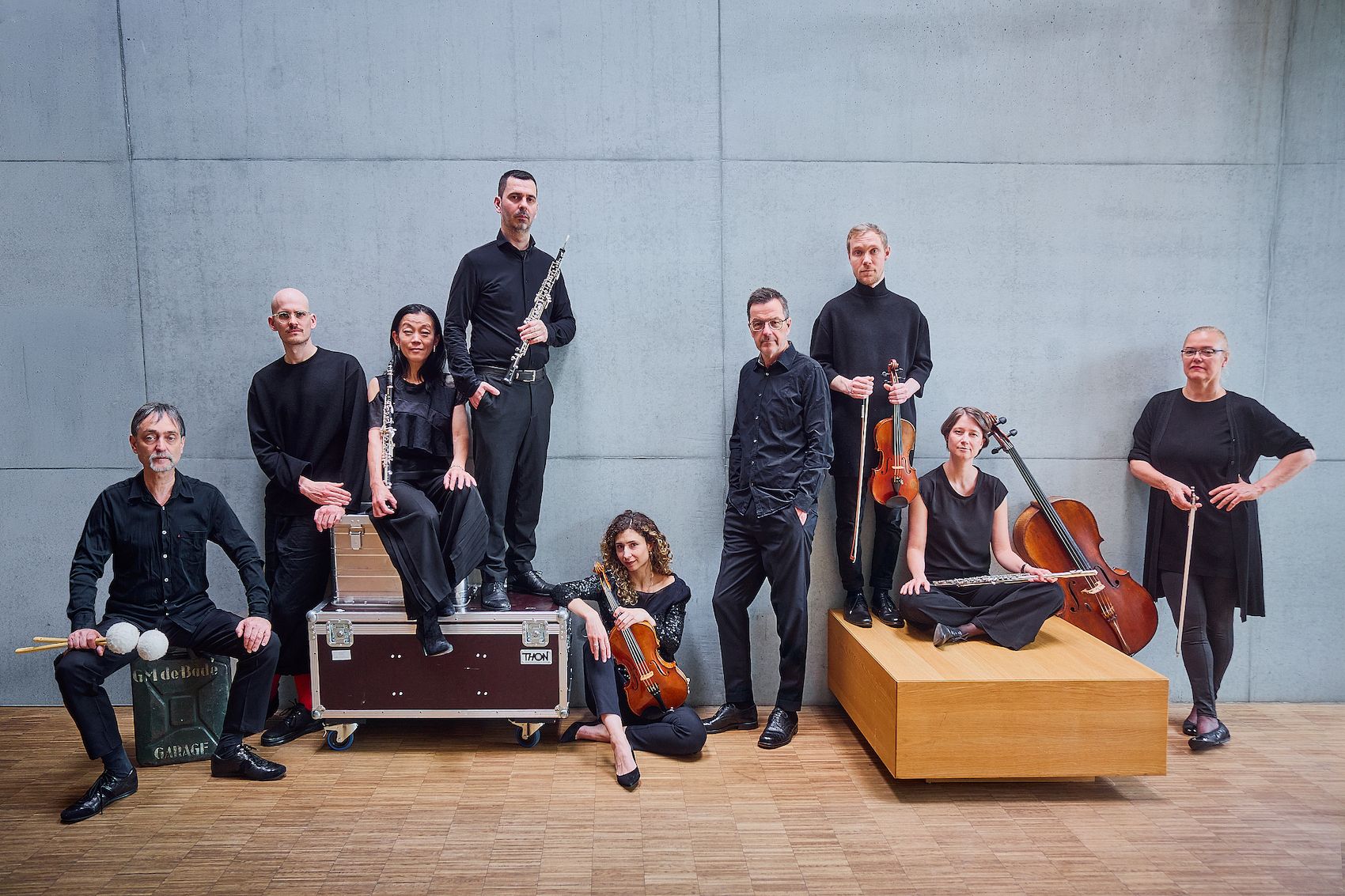
In collaboration with the Ensemble Recherche, this resulted in a spatial composition in twelve scenes. Pitch and rhythm were extracted from the recordings, research data was sonified, and sound patterns were imitated in sessions with the musicians—diverse processes of translation that make the inaudible audible. In the process, the ensemble’s performers developed their own, nature-inspired modes of expression: creature-like voices that oscillate between imitation and invention. Art and science ask the same questions: What does the forest mean to us? Can we learn from its resilience—or will we only listen when it’s too late?