Martina Hefter / Arne Rautenberg / Julia Weber - 40th Freiburg Literary Forum: Three Readings with a Discussion
Martina Hefter: Looking Toward the Sun
Hosted by: Annette Pehnt
Iona Bartschok sees the future towering so high above a lake in the south of Leipzig that she wants to plunge into it. Five thousand years—far enough removed from the present, yet just close enough for her new project. The installation artist is spending the summer in a converted industrial hall in the middle of an artificially flooded open-pit mining region characterized by spoil piles and a ceaseless wind. She’s seeking a break from city life after a painter spray-painted the word “Bullshit” on one of her most important artworks, a treehouse. A dog runs up to her, her landlord’s feisty niece stands at the door, and as the wind picks up outside and the rain floods the streets, life pushes its way back into the hall with all its might.
As in her novel *Hey guten Morgen, wie geht es dir?*, which won the 2024 German Book Prize, writer and performance artist Martina Hefter succeeds in creating an atmospherically charged narrative with *Nach der Sonne schauen* (Klett-Cotta, 2026), to create an atmospherically charged narrative. It tells the story of a woman who sets out on a journey, as light on her feet as she is existential.
Arne Rautenberg: 19 Doors
Moderator: Katharina Knüppel
“Among contemporary German poets, Arne Rautenberg is a wondrous double—and triple—talent,” writes literary scholar and poet Heinrich Detering. With a light touch and sure footing, he balances on the boundaries of genres—between poetry and graphic art, image and text—with his poetry collections, children’s verses, and visual artworks.
His latest collection, *19 Türen* (Wunderhorn, 2026), brings together “lyrical mobiles, graceful little art machines” (FAZ), driven by the wind that blows in Rautenberg’s native Schleswig-Holstein. The sea and the coastal landscape form one of the poetic resonant spaces where nature and language come together. The verses lead on to Rome, which the author explores as a fellow at the Villa Massimo, and time and again into the history of art and literature. And, behind the 19 doors, into a realm of the unconscious, to the origin of language, its own will—to the place where it is magic, wonder, and daring.
Julia Weber: Weil ich Ruth bin
Moderator: Martin Bruch
A work that stands out in contemporary Swiss literature: In her third novel, Julia Weber tells the story of Ruth—who is born with a pelt and possesses a magical connection to the world—in a bold, sensual, and unwavering way. Her story captivates like a long, fantastical dream and touches on questions of what it means to be human and animal, violence, and community.
“For me, art has a great deal to do with compassion and comfort, yet it should also be a place that shows the world without flinching,” says the author. Her story is carried by a language that translates such contradictions into a vivid reflection on the world as it is—or as it could be. Following her novels *Immer ist alles schön* and *Die Vermengung*, Julia Weber spent ten years working on *Weil ich Ruth bin* (Limmat, 2026)—a narrative universe imbued with the power of transformation.
---
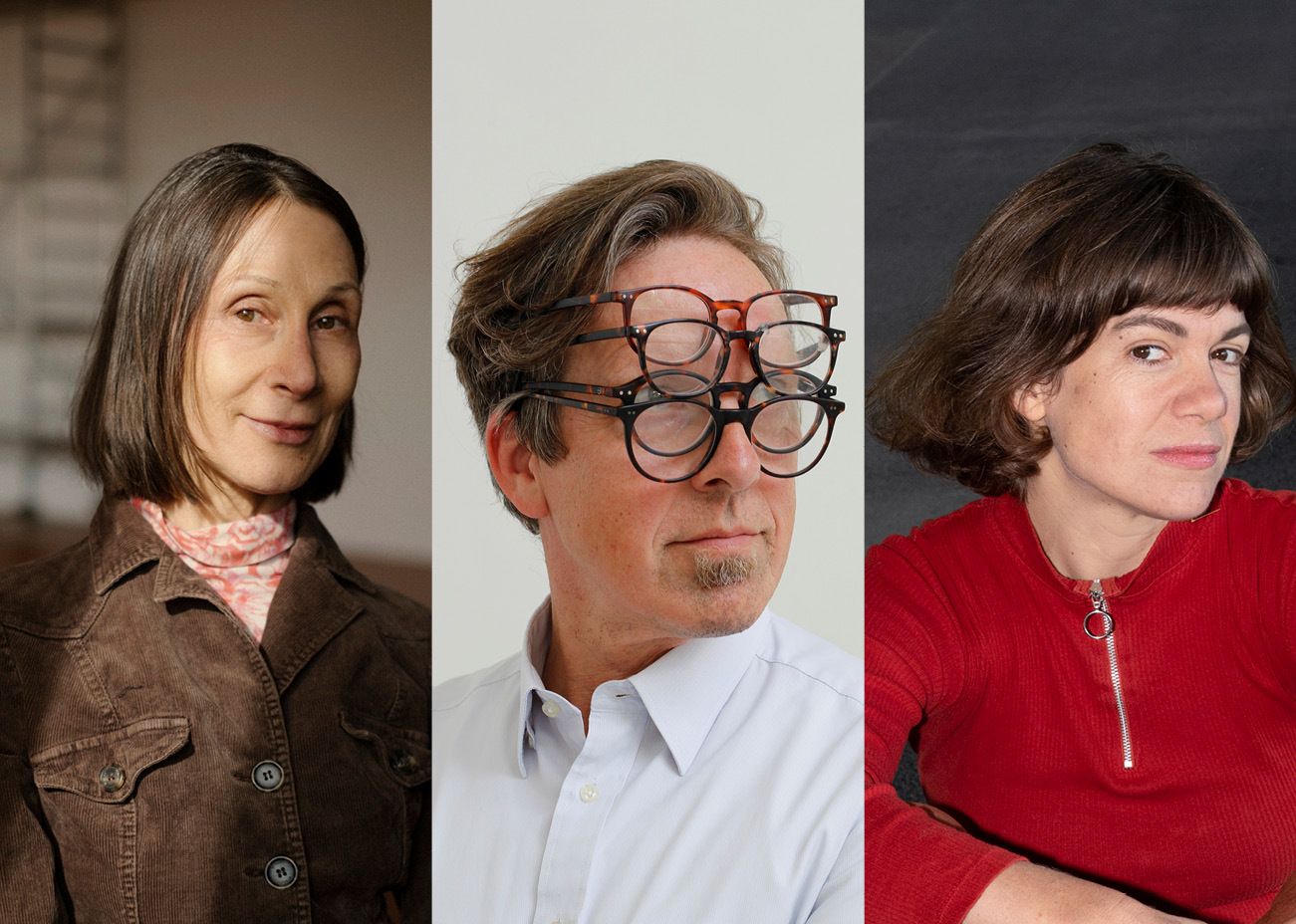
Photos: Martina Hefter, Maximilian Gödecke, Arne Rautenberg, Birgit Rautenberg, Julia Weber, Ayse Yavas
Sponsors: City of Freiburg Department of Culture, Baden-Württemberg Ministry of Science, Research, and the Arts, Sparkasse Freiburg-Nördlicher Breisgau, Guzzoni-Federer Foundation, Deutsche Pfandbriefbank
Cooperation partners: Theater in the Marienbad, jos fritz bookstore
Cultural partner: SWR Kultur
Date: November 7, 2026, 10:00 a.m.–1:00 p.m.
Location: Literaturhaus Freiburg, Bertoldstraße 17
Admission: 11/7 euros
Literary Discussion
Literaturhaus